Getting the most from your tractor tires goes beyond simply filling them with air. Achieving optimal tire pressure – the "Goldilocks" pressure – is crucial for maximizing efficiency and long-term sustainability. This guide provides actionable steps to optimize tire pressure, saving you money, protecting the environment, and ultimately boosting your yields. For more information on tractor tire sizes, check out this helpful resource: tractor tire guide.
Understanding Psi Tractor Tire Pressure and Its Impact
Tractor tire pressure significantly impacts performance and operational costs. Incorrect pressure leads to wasted fuel, increased tire wear, and soil compaction. Finding the ideal pressure is vital for maximizing efficiency and minimizing expenses. This isn't merely about tire maintenance; it's about sustainable agriculture, improving both your bottom line and environmental impact.
The Relationship Between Psi Tractor Tire Pressure and Soil Health
Soil compaction, the compression of soil particles, is a major threat to soil health. It restricts root growth, hindering nutrient and water uptake, resulting in reduced yields. Under-inflated tires distribute weight more evenly, minimizing compaction and promoting better water infiltration and aeration. This leads to healthier roots, stronger plants, and increased harvests.
Fuel Efficiency and Psi Tractor Tire Pressure: Saving Money and Reducing Your Carbon Footprint
Under-inflated tires dramatically increase rolling resistance, forcing your tractor to work harder, consuming more fuel. Conversely, over-inflation reduces tire contact, increasing wear and potentially causing blowouts. Maintaining optimal pressure directly translates to fuel savings and a reduced carbon footprint. "Proper inflation is a simple yet effective way to reduce fuel consumption by as much as 10%," says Dr. Amelia Hernandez, Soil Scientist at the University of California, Davis.
Have you considered the long-term cost savings associated with fuel efficiency? Proper tire pressure can significantly reduce your fuel expenses over time.
Optimizing Psi Tractor Tire Pressure: A Step-by-Step Guide
Follow these steps to optimize your tractor tire pressure:
- Consult tire specifications: Your tire's sidewall or owner's manual provides the recommended cold inflation pressure range.
- Invest in a reliable pressure gauge: An accurate gauge is essential for consistent results. Regularly check your pressure.
- Adjust pressure based on conditions: Optimal pressure varies with workload. Generally, lower pressure is preferred for fieldwork to reduce soil compaction, while slightly higher pressure is suitable for road travel, enhancing tire stability and reducing wear.
- Monitor tire wear: Uneven wear indicates improper inflation. Adjust pressure accordingly if needed.
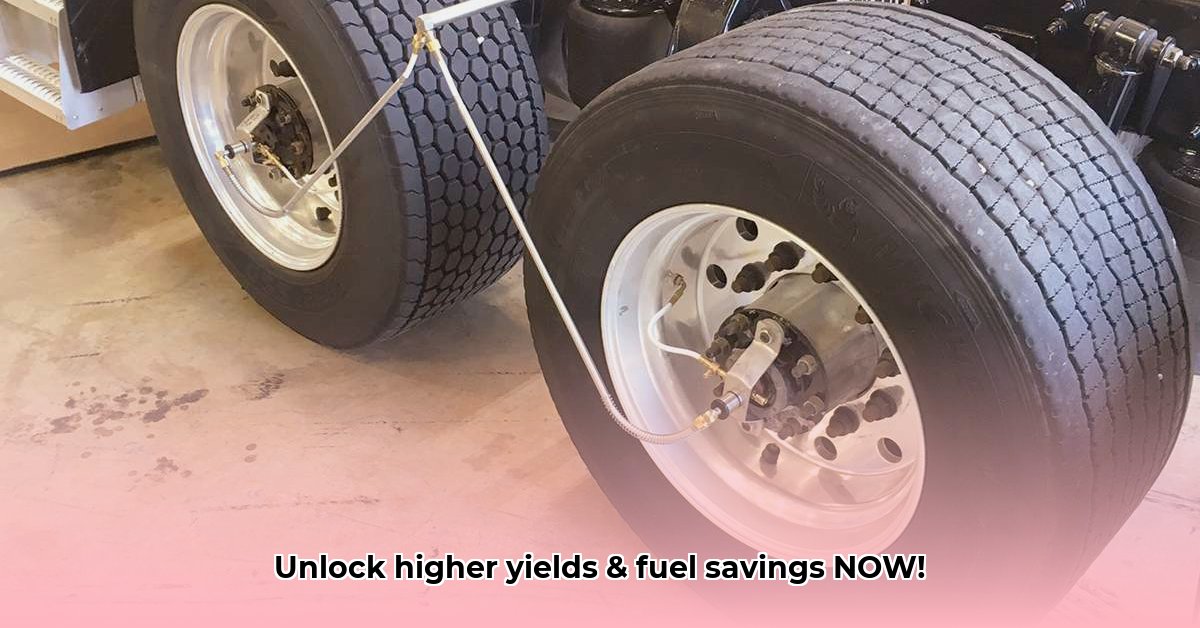
- Consider a Central Tire Inflation System (CTIS): CTIS allows for on-the-go adjustments, optimizing pressure for varying field conditions. While an investment, the long-term benefits often justify the cost.
Aren't you curious about how much fuel you could save by implementing these simple steps? Accurate pressure management can yield substantial cost reductions.
Actionable Steps for Every Stakeholder
Optimizing tractor tire pressure requires a collaborative effort across all stakeholders.
| Stakeholder | Short-Term Actions | Long-Term Strategies |
|---|---|---|
| Farmers | Regular tire pressure checks; appropriate pressure adjustments for different tasks; close monitoring of tire condition. | Invest in a CTIS; consider upgrades to more durable, fuel-efficient tires; implement advanced soil health monitoring; seek training on tire management. |
| Equipment Manufacturers | Design tractors with integrated pressure monitoring systems; develop more robust, fuel-efficient tire designs. | Continue research and development of advanced CTIS and pressure monitoring systems; create tires optimized for various soil types and farming practices. |
| Research Institutions | Conduct research on the long-term effects of tire pressure on soil and yield. | Develop improved guidelines and best practices for tire pressure management; invest in technologies to assist farmers in optimizing tire use. |
How to Calculate Optimal Tractor Tire Pressure for Diverse Soil Conditions
Mastering optimal tire pressure requires understanding your soil and equipment. Incorrect pressure, whether over- or under-inflation, leads to inefficiency and damage. Finding the ideal pressure maximizes traction, minimizes compaction, and improves fuel economy.
Factors Influencing Optimal Pressure
Several factors influence ideal tire pressure:
- Soil Type: Sandy soils require lower pressures than clay soils.
- Soil Moisture: Wet soils necessitate lower pressures.
- Load: Heavier loads require higher pressures.
- Tire Size: Larger tires generally support heavier loads at higher pressures.
- Speed: Higher speeds require slightly higher pressures.
Calculating Optimal Tractor Tire Pressure
Determining the ideal psi involves:
- Consulting your tire's sidewall: This indicates the maximum pressure, not necessarily the optimal pressure.
- Using a tire pressure calculator: Online tools like Michelin's Agropressure1 integrate various factors to provide initial estimates.
- Conducting field tests: Monitor performance under different conditions, adjusting pressure incrementally to observe the impact on soil compaction, fuel consumption, and traction.
Remember to check pressure both before and after each work session, as temperature fluctuations can affect pressure.
Creating a Pressure Management Plan
A comprehensive pressure management plan includes:
- Seasonal Adjustments: Adjust pressure to account for seasonal soil moisture changes.
- Record Keeping: Maintain a log documenting pressure, soil conditions, and observations.
- Field Mapping: Use GPS to monitor pressure across different field zones for increased precision.
By implementing these strategies you can achieve significant improvements in fuel efficiency, soil health, and overall farm productivity. The long-term benefits of a robust tire pressure management system far outweigh the initial effort.